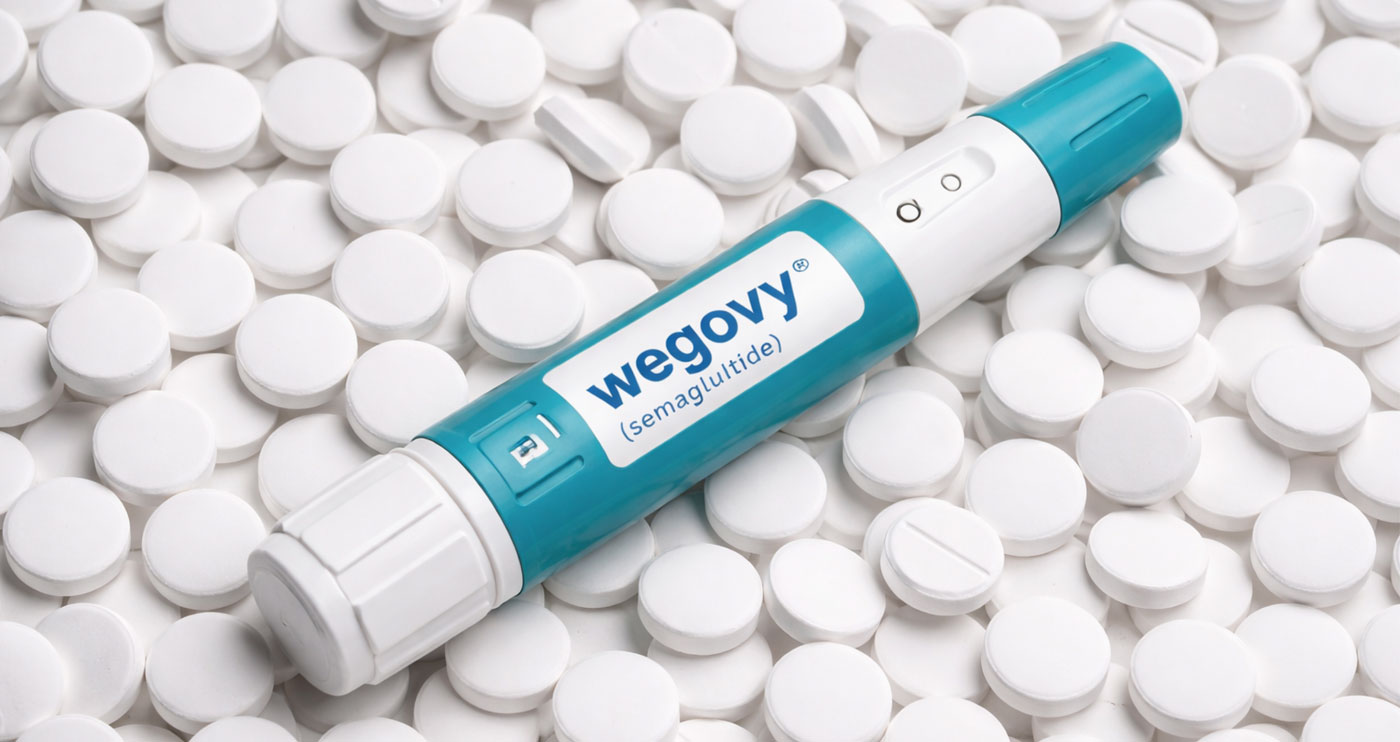
For years, one of the biggest obstacles to semaglutide treatment was simple: the needle. Some patients delayed starting. Others stopped. Now that barrier has a clinical answer. In December 2025, the FDA approved the Wegovy pill, the first oral GLP-1 receptor agonist cleared specifically for weight management in adults, and clinical trial data show it produces weight loss comparable to the weekly injection.
But comparable does not mean identical, and for many patients, the differences between the two forms matter more than the similarities. If you are weighing your options on Long Island, here is what the evidence actually tells you about each one.
What Is Semaglutide, and How Does It Work?
Semaglutide is a glucagon-like peptide-1 (GLP-1) receptor agonist, a class of medication that mimics a hormone your gut naturally produces after eating. When that hormone signal is activated, several things happen at once: your pancreas releases more insulin, your liver slows glucose production, and your brain receives signals that reduce hunger and slow the rate at which your stomach empties. The result is a sustained reduction in appetite and caloric intake over time.
Semaglutide has been studied extensively for over a decade. It is the active ingredient in Ozempic and Rybelsus, both approved for type 2 diabetes management, as well as in Wegovy, which is approved for chronic weight management. The injectable form of Wegovy at 2.4 mg weekly has been available since 2021. The oral pill, approved at a 25 mg once-daily dose, became the newest addition to this family of medications in late 2025.
The Injectable Wegovy: What Patients Should Know
Injectable Wegovy (semaglutide 2.4 mg) is administered once weekly via a subcutaneous injection, typically in the abdomen, thigh, or upper arm. Patients begin at a lower dose and gradually increase over several months to reach the full maintenance dose. The injection must be stored in a refrigerator at temperatures between 36 and 46 degrees Fahrenheit.
The clinical evidence behind the injectable is robust. In the landmark STEP 1 randomized controlled trial, published in the New England Journal of Medicine, participants using Wegovy injections alongside lifestyle intervention lost an average of approximately 15% of their body weight over 68 weeks. A real-world retrospective analysis published in Frontiers in Endocrinology confirmed that injectable semaglutide achieves significant weight reduction with mild to moderate gastrointestinal side effects and a discontinuation rate of only 7% among participants.
For patients with obesity-related cardiovascular disease, injectable Wegovy also carries an FDA indication to reduce the risk of major adverse cardiovascular events, including heart attack and stroke, based on data from the SELECT cardiovascular outcomes trial.
The New Oral Wegovy Pill: What Changed?
On December 22, 2025, the FDA approved the Wegovy pill (once-daily oral semaglutide 25 mg), marking the first time a GLP-1 receptor agonist has been cleared specifically for weight management in an oral form. Novo Nordisk launched it commercially in the United States in early January 2026.
The pill is taken once daily on an empty stomach with no more than 4 ounces of plain water. After taking it, patients must wait at least 30 minutes before eating, drinking anything other than water, or taking other oral medications. This requirement exists because the oral formulation depends on a specific absorption mechanism through the stomach lining. Unlike the injectable, the pill does not require refrigeration.
The dosing schedule for the pill follows a gradual escalation. Patients start at 1.5 mg daily and advance through doses of 4 mg and 9 mg over approximately 12 weeks before reaching the 25 mg maintenance dose. This slow titration helps the body adjust and minimizes gastrointestinal side effects.
Because the pill bypasses injection entirely, it removes the barrier for patients who experience needle anxiety or who find weekly self-injection difficult to maintain. It also offers a more discreet treatment experience and eliminates the cold-chain storage requirement.
How Do the Results Compare?
The most important clinical comparison comes from the Phase 3 OASIS 4 trial, the study that supported the FDA approval of the Wegovy pill. The trial enrolled 307 adults with obesity or overweight who had at least one weight-related comorbidity. Participants were randomly assigned to receive once-daily oral semaglutide or placebo alongside structured lifestyle interventions, including a calorie-reduced diet and at least 150 minutes of physical activity per week.
At 64 weeks, participants taking the oral pill lost a mean of 13.6% of their baseline body weight, compared to 2.2% in the placebo group, a statistically significant difference. When accounting for full treatment adherence, the mean weight loss in the oral semaglutide group rose to 16.6%. One in three participants who adhered to treatment achieved 20% or greater weight loss. Results were published in the New England Journal of Medicine in September 2025.
Researchers and clinicians presenting at ObesityWeek 2024 noted that the weight loss seen with oral semaglutide 25 mg was comparable to results reported in STEP 1 for the injectable 2.4 mg weekly dose. Dr. W. Timothy Garvey, a lead investigator at the University of Alabama at Birmingham, stated that the oral option could improve long-term adherence by providing patients with a non-injectable alternative that delivers similar metabolic benefits.
However, it is worth noting one key variable: the pill requires strict adherence to its dosing protocol. In real-world conditions, even small departures from the empty-stomach rule can reduce the medication’s absorption and blunt its effectiveness. Real-world performance with the injectable, where no food timing restrictions apply, has been more consistent across diverse patient populations.
Side Effects: Are They Different Between the Two Forms?
Both the pill and the injection share the same core side effect profile. The most commonly reported adverse reactions for both forms include nausea, vomiting, diarrhea, and constipation. These effects are typically most pronounced early in treatment and tend to diminish as the body adjusts to the medication over the dose-escalation period.
OASIS 4 trial data showed that 93.1% of participants on oral semaglutide experienced at least one adverse event, compared with 85.3% of those on placebo. Importantly, most events were mild or moderate in severity, and none resulted in permanent discontinuation of treatment. Serious adverse events were actually less frequent in the oral semaglutide group (3.9%) than in the placebo group (8.8%).
The prescribing information for both forms of Wegovy includes a boxed warning regarding the risk of thyroid C-cell tumors observed in animal studies, although a causal link in humans has not been established. Patients with a personal or family history of medullary thyroid carcinoma or Multiple Endocrine Neoplasia syndrome type 2 should not use semaglutide in any form.
For patients who experienced significant gastrointestinal side effects on the injectable and stopped treatment as a result, the pill does not represent a safer alternative in that regard. Both forms carry the same risk profile for GI symptoms.
Cost and Insurance Coverage
Cost is one area where differences may emerge, particularly for patients paying out of pocket. Some self-pay programs offer lower introductory pricing for oral semaglutide compared to injectable options. However, this difference is not consistent across all doses or programs, and costs for both forms often converge at higher maintenance levels.
For Long Island patients with insurance, out-of-pocket costs can vary widely depending on coverage, with some patients paying as little as $25 per month for either option. Because pricing structures change frequently and vary by plan, cost should be evaluated on a case-by-case basis rather than assumed upfront.
Who May Be a Better Candidate for Each Option?
Both forms of Wegovy are indicated for adults with a BMI of 30 or higher, or a BMI of 27 or higher with at least one weight-related health condition. Within that eligible population, clinical guidance and real-world data suggest that the following factors can help determine which option is the better fit.
The pill may be a better starting point for patients who:
- Have a strong aversion to needles or self-injection
- Are earlier in their weight loss journey and want to establish habits before committing to injections
- Prefer a potentially lower-cost option without compromising clinical effectiveness
- Have a predictable morning routine that accommodates the empty-stomach dosing requirement
- Prefer not to deal with refrigeration or storage requirements
The injection may be a better fit for patients who:
- Have an irregular schedule that makes consistent morning fasting difficult
- Take multiple daily oral medications that cannot be spaced 30 minutes from the semaglutide pill
- Have tried the pill and had suboptimal results due to adherence challenges
- Are seeking a once-weekly dosing schedule that requires less daily attention
- Have established cardiovascular disease and benefit from the broader outcomes data behind the injectable form
The Frontiers in Endocrinology review noted that oral semaglutide may be especially useful in patients who decline injectable therapy, when injectable medications are unavailable, or as an initial therapy before transitioning to more potent treatment options. It is not a downgrade. It is a different delivery method for the same active compound, with clinical outcomes that are now well-documented.
The Role of Lifestyle in Both Treatments
One point the clinical literature makes consistently is that neither form of Wegovy works in isolation. Both the OASIS 4 trial for the pill and the STEP 1 trial for the injection included structured lifestyle interventions as part of the treatment protocol. The weight loss outcomes reported in those trials reflect combined treatment, not medication alone.
Patients who invest in dietary counseling, regular movement, and behavioral support alongside their medication consistently achieve better and more durable results. Whether you are taking the pill or the injection, working with a provider who incorporates nutritional guidance and accountability into your care plan makes a measurable difference in long-term outcomes.
Making the Right Choice for Your Weight Loss Journey on Long Island
The arrival of the Wegovy pill is a genuine advancement in how patients on Long Island can access effective semaglutide therapy. For the first time, a needle-free option delivers weight loss results that are comparable to the weekly injection, at a lower monthly cost, without the cold-chain requirement. That matters for patient access and long-term adherence.
At the same time, the injectable Wegovy remains a clinically strong option with years of real-world data behind it, a flexible dosing schedule, and fewer daily-routine requirements. For patients who are already on the injection and responding well, there is no compelling clinical reason to switch.
The best approach is not about choosing the newest option or the most familiar one. It is about choosing the option that fits your physiology, your schedule, your health history, and your commitment to the lifestyle changes that make medication most effective. That is a decision best made in partnership with a knowledgeable provider who can review your full picture.
LIWLI offers both oral and injectable semaglutide and tailors treatment plans to the individual needs of each patient. Whether you are just beginning to explore your options or looking to reassess a current treatment, our team can help you make an informed, evidence-based decision about the approach that gives you the best path forward.