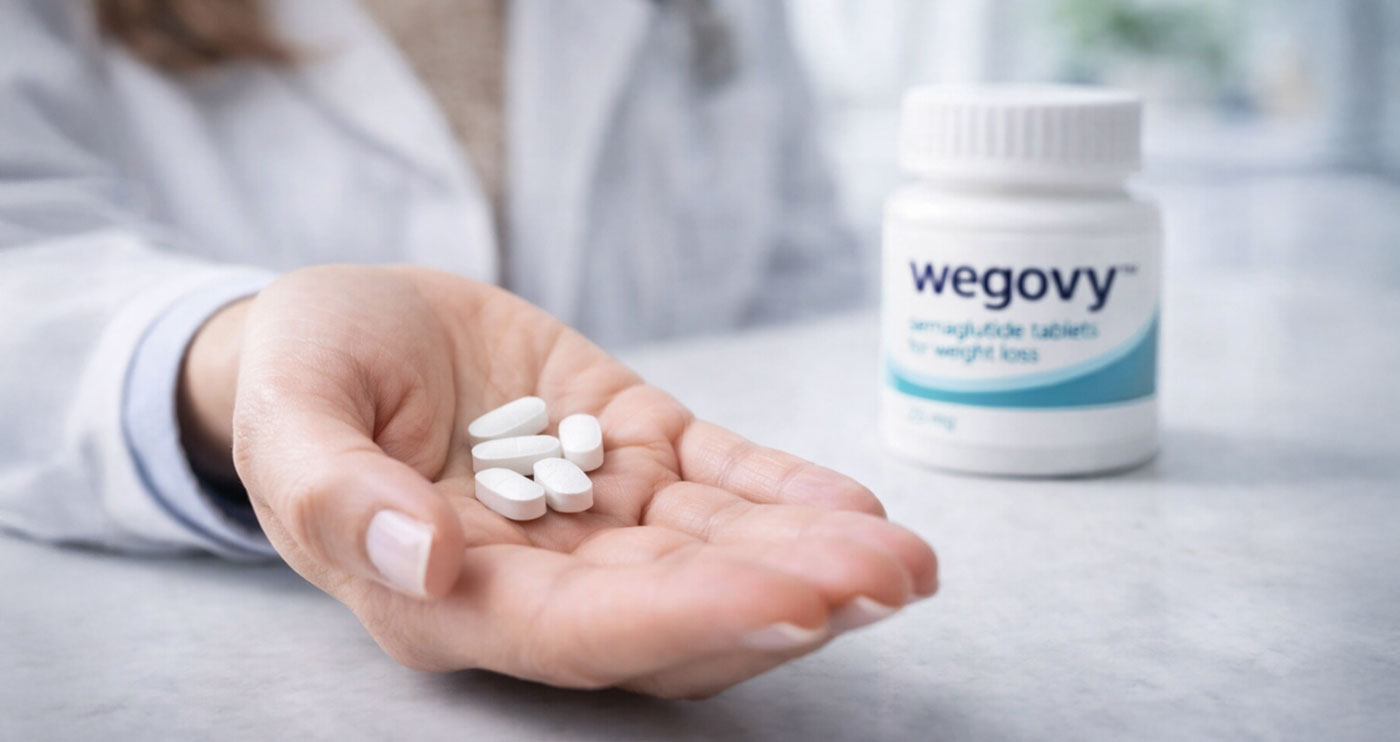
On December 22, 2025, the FDA approved oral semaglutide for weight loss, often described as a “Wegovy pill.” This is the first time a GLP-1 medication specifically designed for weight management is available in pill form instead of a weekly injection.
The approval matters because many people avoid GLP-1 therapy entirely due to needle anxiety or injection site reactions. Others struggle with the weekly injection routine or the requirement to refrigerate their medication. The pill removes these barriers.
At Long Island Weight Loss Institute, we have been prescribing GLP-1 medications since they became available for weight management. The pill offers another option, but it is not better or worse than the injection. It simply works differently, and the choice depends on your lifestyle and medical needs.
What Is the Wegovy Pill?
The Wegovy pill contains 25 mg of semaglutide, the same medication found in injectable Wegovy and Ozempic. It is taken once daily instead of once weekly. The pill does not require refrigeration and eliminates needles entirely.
This is different from Rybelsus, another oral semaglutide medication. Rybelsus is FDA-approved only for type 2 diabetes, not weight loss. The doses are also different. Rybelsus is available in 7 mg and 14 mg, while the Wegovy pill delivers 25 mg daily for weight management.
What Is the Wegovy Pill and How Does It Work?
The Wegovy pill works the same way injectable GLP-1 medications work. It mimics a natural hormone called glucagon-like peptide-1, which regulates appetite and digestion.
GLP-1 slows how quickly food leaves your stomach, which means you feel full longer. It also reduces hunger signals in the brain and improves how your body handles blood sugar. Many patients describe this as finally having control over their appetite instead of fighting constant cravings.
Beyond weight loss, semaglutide medications like Wegovy have also been shown to reduce the risk of heart attack, stroke, and cardiovascular death in adults with known heart disease who are overweight or obese.
Clinical Trial Results: How Much Weight Can the Wegovy Pill Help You Lose?
The FDA approval was based on the OASIS 4 trial, published in the New England Journal of Medicine in September 2025. The study enrolled 307 adults without diabetes who had obesity or were overweight with at least one weight-related condition.
Participants took either oral semaglutide 25 mg daily or a placebo, along with diet and exercise counseling. The dose was gradually increased over 12 weeks to reduce side effects.
After 64 weeks, people taking the Wegovy pill lost an average of 13.6% of their body weight, compared to 2.2% with placebo. For those who stayed on treatment consistently, average weight loss reached 16.6%: about 33 pounds for a typical participant.
Nearly 80% of participants lost at least 5% of their body weight. Half lost 15% or more. Thirty percent lost 20% or more.
These results closely match the weight loss seen with injectable Wegovy in earlier trials, suggesting that oral semaglutide can produce comparable results for many patients.
The trial also showed improvements beyond weight loss. Blood pressure dropped. Cholesterol levels improved. Blood sugar control got better: 71% of people with prediabetes achieved normal blood sugar by the end of the study. Inflammation decreased. Physical function and quality of life improved.
Who Is Eligible to Take the Wegovy Pill for Weight Loss
The FDA approved the Wegovy pill for adults with a BMI of 30 or higher, or a BMI of 27 or higher with at least one weight-related condition such as diabetes, high blood pressure, high cholesterol, heart disease, sleep apnea, or fatty liver disease.
The medication must be used with a reduced-calorie diet and increased physical activity. It is not a standalone solution. This is why physician-supervised programs matter. The medication works best when paired with proper nutrition, exercise, and ongoing medical monitoring.
Who Should Not Take the Wegovy Pill
The Wegovy pill is not safe for everyone.
You cannot take it if you have a personal or family history of medullary thyroid carcinoma, a rare type of thyroid cancer. You also cannot take it if you have Multiple Endocrine Neoplasia syndrome type 2 (MEN 2), a genetic condition that increases tumor risk. If you have had a serious allergic reaction to semaglutide, you should not take the pill.
These restrictions exist because studies in rodents showed an increased risk of thyroid tumors with semaglutide. It is not known if this risk applies to humans, but the FDA requires the warning.
Your doctor will also carefully review your history if you have had pancreatitis, gallbladder disease, kidney problems, severe digestive issues, diabetic retinopathy, or depression. Women who are pregnant, planning to become pregnant, or breastfeeding should not take the medication for weight loss.
How to Take the Wegovy Pill for Maximum Effectiveness
The Wegovy pill must be taken correctly or it will not work.
Take it first thing in the morning on an empty stomach. Swallow the tablet whole with up to 4 ounces of plain water. Do not use coffee, tea, juice, or any other liquid. Do not split, crush, or chew the tablet.
Wait at least 30 minutes before eating, drinking anything else, or taking other oral medications. The longer you wait, the better the absorption. Some studies suggest waiting up to two hours improves effectiveness, but 30 minutes is the minimum.
This strict routine is necessary because the pill contains an absorption enhancer that helps semaglutide cross from your stomach into your bloodstream.
Food and other beverages interfere with this process.
The dose starts low and increases gradually over 12 weeks. You begin with 1.5 mg daily for four weeks, then increase to 4 mg for four weeks, then 9 mg for four weeks. After that, you take the 25 mg maintenance dose long-term.
Wegovy Pill vs Injection: What’s the Difference?
Both formulations contain semaglutide and produce similar weight loss. The differences are practical.
The pill is taken once daily, every morning, on an empty stomach with a 30-minute wait. The injection is given once weekly, any day, any time, with or without food.
The pill does not require refrigeration. The injection must be kept between 36 and 46 degrees Fahrenheit.
The pill eliminates needles. The injection requires a subcutaneous shot using a pre-filled pen.
Both have similar side effects: nausea, vomiting, diarrhea, and constipation. Both cost about the same: $149 to $299 per month for self-pay with the pill, $199 to $349 for the injection. With commercial insurance and manufacturer savings, both can be $25 per month.
The choice depends on your routine. If you take multiple medications in the morning or have trouble with strict timing, the injection may be easier. If you have needle anxiety or prefer daily routines, the pill may fit better.
Wegovy Pill Side Effects and How to Manage Them
Most people experience gastrointestinal symptoms when starting GLP-1 medications. In the clinical trial, 74% of people taking the Wegovy pill had GI side effects, compared to 42% on placebo.
Nausea is the most common issue, affecting about half of patients. Vomiting, constipation, diarrhea, and abdominal discomfort also occur. These symptoms are usually mild to moderate and improve over time.
Gradual dose escalation helps. So does eating smaller meals, avoiding greasy or spicy foods, and staying hydrated. Some patients benefit from anti-nausea medication.
At Long Island Weight Loss Institute, we monitor patients closely during the first few months. We adjust doses if side effects are too bothersome, provide nutritional guidance to minimize symptoms, and ensure patients are losing fat, not muscle, using body composition analysis.
Serious side effects are rare but require immediate attention. Severe abdominal pain that does not go away may indicate pancreatitis. A lump or swelling in the neck could be a thyroid issue. Severe nausea or vomiting that prevents drinking fluids can lead to dehydration and kidney problems.
How Much Does the Wegovy Pill Cost and Will Insurance Cover It?
The list price for the Wegovy pill is about $1,349 for a 30-day supply. Most patients do not pay that amount.
For self-pay, manufacturer programs offer reduced pricing. Starter doses of 1.5 mg and 4 mg cost $149 per month, though the 4 mg price increases to $199 after April 15, 2026. Higher doses of 9 mg and 25 mg cost $299 monthly. These prices are available through NovoCare Pharmacy or select retail pharmacies.
Patients with commercial insurance may pay as little as $25 per month using the Wegovy Savings Offer from Novo Nordisk. According to the manufacturer, 90% of patients with private insurance have copays between $0 and $25 monthly. You must have commercial insurance, your plan must cover Wegovy, and you cannot be on Medicare or Medicaid.
Medicare does not cover GLP-1 medications prescribed solely for weight loss. It may cover them when prescribed to reduce cardiovascular risk. Broader Medicare coverage for obesity is expected in mid-2026, with copays around $50 per month.
Medicaid coverage varies by state. Only 13 states covered GLP-1s for weight loss as of January 2026.
Coverage for weight loss medications is constantly changing. Many commercial plans now require prior authorization, step therapy, or documentation of medical necessity. At Long Island Weight Loss Institute, our staff helps navigate these requirements during your consultation.
Why the Wegovy Pill Should Be Prescribed by a Physician
GLP-1 medications are powerful tools, but they are not magic. They work best when paired with proper medical oversight.
Before prescribing the Wegovy pill, your physician should review your complete medical history, perform a physical exam, screen for contraindications, and order baseline lab tests, including metabolic panel, kidney function, liver enzymes, thyroid function, and lipid panel. An EKG assesses heart health.
Body composition analysis measures fat mass, muscle mass, and water – not just total weight.
Ongoing monitoring continues throughout treatment. Regular visits track your progress, manage side effects, and ensure you are losing fat while preserving muscle. Lab work monitors for complications. Nutritional counseling and exercise recommendations support lasting results.
At Long Island Weight Loss Institute, we have been providing physician-supervised weight loss since 2001. Dr. Michael Kaplan has been board-certified in obesity medicine since 2005. We use body composition analysis at each visit to optimize fat loss and preserve muscle. We provide individualized care, not group sessions or one-size-fits-all protocols.
Unsupervised use of GLP-1 medications carries real risks. Patients may use the medication despite contraindications, miss serious complications like pancreatitis or gallbladder disease, lose muscle mass without proper nutrition guidance, or lack a long-term maintenance plan. Recent FDA warnings about compounded semaglutide highlight the dangers of obtaining these medications through non-medical channels.
Is the Wegovy Pill Right for You?
The Wegovy pill offers a new option for people who want GLP-1 therapy without injections. It produces weight loss comparable to the injection (13 to 17% of body weight over 64 weeks) along with improvements in blood pressure, cholesterol, blood sugar, and inflammation.
The pill requires a strict morning routine. It must be taken on an empty stomach with plain water, followed by a 30-minute wait. This may not be practical for everyone, but for people who prefer daily pills over weekly injections, it removes a significant barrier to treatment.
The medication is not a quick fix. It works best when paired with reduced-calorie eating, increased physical activity, and comprehensive medical supervision. Weight loss takes time. Side effects are common. Long-term planning is essential.
At Long Island Weight Loss Institute, we view GLP-1 medications as tools within a larger treatment framework. We help patients implement the lifestyle changes that make these medications most effective, monitor for complications, and develop strategies for keeping weight off after reaching their goals.
If you have been struggling with your weight and have a BMI of 27 or higher, the Wegovy pill may be worth discussing with a physician who specializes in obesity medicine. Contact Long Island Weight Loss Institute to learn more and schedule a consultation.