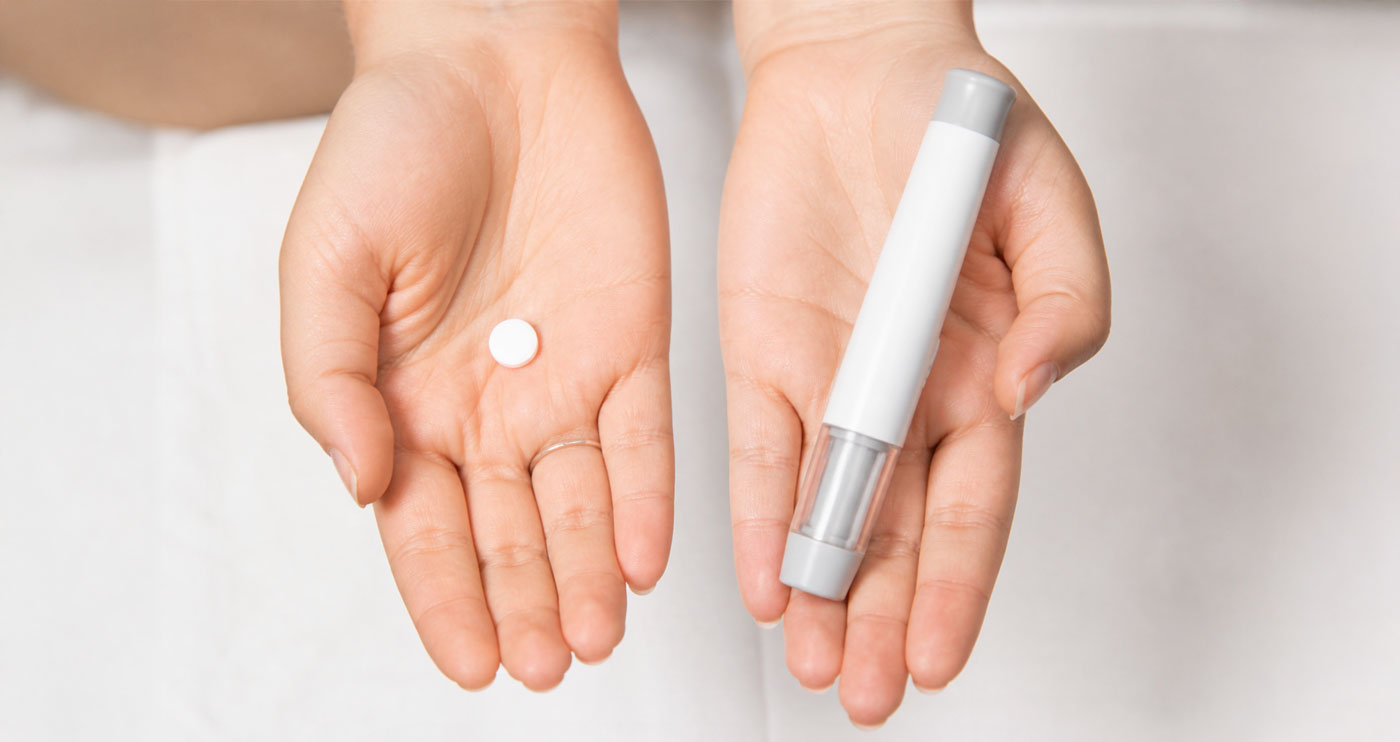
If you have been taking Wegovy injections for a while, you may have heard about the new Wegovy pill and started wondering: can I switch? Is it worth it? Will I lose the progress I have already made?
These are completely reasonable questions, and you are far from alone in asking them. Since the FDA approved the Wegovy pill in December 2025, a lot of Long Island patients who are already on the weekly injection have been asking us whether switching makes sense for them.
The short answer is: yes, switching is possible, and for some people it is a great option. But it is not for everyone, and there are a few things you should understand before making the change.
First, a Quick Reminder: Both Forms Contain the Same Medication
The Wegovy injection and the Wegovy pill both contain semaglutide, the same active ingredient. They work the same way in your body. The main difference is simply how the medication gets delivered: a once-weekly shot versus a once-daily pill.
Because it is the same drug, switching does not mean starting over from scratch. Your body is already familiar with semaglutide. What changes when you switch is the delivery method and the daily routine, not the underlying treatment.
So, Can You Actually Switch?
Yes. According to Novo Nordisk, the maker of Wegovy, patients who are on the 2.4 mg weekly injection can switch to the 25 mg daily pill. The process is straightforward: you take your last injection on your regular schedule, wait one full week, and then start the pill.
Going the other direction works too. If you try the pill and decide you prefer the injection, you can switch back. In that case, you would stop the pill and start your next injection the very next day.
The key thing to know is that you should never take both at the same time. You are not doubling up on medication. You are simply switching from one form to the other, and timing matters.
As with any change to your medication, this should be done with guidance from your doctor, not on your own.
What Changes When You Switch to the Pill
The biggest adjustment when switching to the pill is not the medication itself. It is the daily routine that comes with it.
With the injection, you pick one day a week, take your shot, and that is it. Timing is flexible. You can do it in the morning or the evening, with food or without. The injection goes under the skin and absorbs directly into your bloodstream, so there are no restrictions on eating or drinking.
The pill works differently. Because semaglutide breaks down in the stomach if not taken correctly, the pill has to be taken under specific conditions to actually work:
- First thing in the morning, before eating anything
- With no more than 4 ounces of plain water (no coffee, no juice, no tea)
- At least 30 minutes before eating, drinking anything else, or taking other medications
That 30-minute window is not optional. It is the only way the pill can be absorbed properly. If you eat or drink something else too soon, a lot of the medication does not make it into your system, and your results can suffer.
For people with straightforward morning routines, this is easy to build into a habit. For people who wake up and immediately make coffee, take multiple medications, or have unpredictable mornings, it can be a real challenge.
Will You Lose the Progress You Have Already Made?
This is probably the question we hear most. The good news is that switching forms of semaglutide does not cause you to lose ground, as long as the transition is handled correctly.
The medication stays active in your system during the one-week gap between your last injection and your first pill. So there is no abrupt stop to the treatment. Your appetite suppression and the metabolic effects of the medication will continue through that transition period.
Where some patients do run into trouble is in the first few weeks after switching, when they are still adjusting to the daily routine of the pill. If doses are missed or the morning timing rules are not followed consistently, absorption can be unpredictable, and some patients notice a temporary dip in results. This is usually temporary and corrects itself once the routine is established.
Does the Pill Work as Well as the Injection?
This is a fair question, and the honest answer is: the results are very similar, but not exactly identical.
In the OASIS 4 clinical trial published in the New England Journal of Medicine, people taking the 25 mg daily pill lost an average of 13.6% of their body weight over 64 weeks. People who stayed on the pill consistently throughout the trial averaged 16.6% weight loss.
The STEP 1 trial for the injectable Wegovy showed average weight loss of about 14.9% over 68 weeks. So the two forms produce comparable results, though individual experiences vary.
The bigger factor in real-world results is adherence. The injection is hard to miss because you only do it once a week. The pill requires a consistent daily routine, and even small disruptions (a rushed morning, a travel day, forgetting to wait before coffee) can reduce how well the medication absorbs. If you are disciplined about routines, the pill can absolutely deliver results on par with the injection. If your schedule is unpredictable, the injection may actually be easier to stay consistent with.
Who Is a Good Candidate for Switching?
Switching to the pill tends to make the most sense for Long Island patients who:
- Have needle anxiety or find the weekly injection uncomfortable, and now want a needle-free option
- Travel frequently, since the pill does not require refrigeration and is easier to carry
- Have a consistent morning routine and can reliably take the pill on an empty stomach
- Prefer taking a daily pill over remembering a weekly injection schedule
Who Might Want to Stay on the Injection
Sticking with the injection is often the better choice for patients who:
- Take multiple other medications in the morning, since spacing them around the pill’s 30-minute window can be complicated
- Have irregular schedules or busy mornings that make a strict daily routine hard to maintain
- Have established cardiovascular disease, since the injectable Wegovy has a specific FDA indication to reduce the risk of heart attack and stroke based on the large SELECT cardiovascular outcomes trial, and that same broad outcomes data does not yet exist for the pill
- Are already happy with their results on the injection and see no practical reason to change
What About Side Effects When You Switch?
Since the medication is the same, the overall side effect profile is similar for both forms. The most common issues are nausea, stomach discomfort, and constipation, especially in the first few weeks of a new dose.
Some patients do notice a brief uptick in nausea when they switch forms, even if they were feeling fine on the injection. This tends to settle down within a couple of weeks as the body adjusts to the new delivery method.
One thing worth knowing: the pill has a slightly higher rate of burping reported as a side effect compared to the injection. It is not serious, but it is worth being aware of. The injection, on the other hand, can cause mild soreness or redness at the injection site, which the pill obviously does not.
How Do You Know If Switching Is Right for You?
The honest answer is that there is no universal right choice. Both forms of Wegovy work. Both can produce meaningful weight loss when used correctly. The decision really comes down to your lifestyle, your routine, and what is going to be easier to stick with over the long term.
What we always tell our patients at Long Island Weight Loss Institute is this: the best medication is the one you actually take consistently. If needle anxiety has been making you dread your weekly injection, the pill removes that barrier entirely. If your mornings are already packed and adding a strict timed routine sounds unrealistic, the injection may be the simpler path.
The worst thing you can do is switch on your own without talking to your doctor first. The transition has specific timing requirements, and your dose history matters. A physician who knows your case can walk you through the switch in a way that protects your progress and minimizes disruption.
Should You Switch from the Wegovy Injection to the Pill?
Switching from the Wegovy injection to the pill is safe, practical, and works well for a lot of people. The medication is the same. The results are comparable. And for patients who have been dreading their weekly shot, or who want something easier to travel with, the pill can be a genuine quality-of-life improvement.
The most important thing to get right is the transition itself. Waiting the full week between your last injection and your first pill, following the morning timing rules consistently, and keeping your doctor in the loop throughout the process are what determine whether the switch goes smoothly.
If you are on Long Island and thinking about making the change, or still weighing your options between the two forms, a conversation with a physician who knows your history is the best next step. Switching because it sounds appealing is one thing. Switching because it genuinely fits your routine and your goals is another. A good doctor will help you tell the difference.
Long Island Weight Loss Institute offers consultations at locations in East Meadow, Amityville, Smithtown, and Port Jefferson Station, as well as telehealth visits. Request a consultation here.